Showing posts with label manufacturing. Show all posts

02 June 2010

Made in New Holstein

IMG_3930

IMG_0487

I probably only noticed the label on the catering event chairs last weekend because I have been through New Holstein. It's in lovely country, eastern central Wisconsin, north of Milwaukee, between Lake Michigan and Lake Winnebago. Kestell is, according to their website "the oldest and largest manufacturer of quality poker tables in the world. . . family owned and operated since 1950." I'm not much of a poker player, but the folding leg card table and the folding leg domino table are both pretty sweet. I didn't have a chance to take a picture of the whole chair, but they are on the website if you want to take a look, just a decent looking, easily folded folding chair.

The somewhat upsetting part for me is that the rental chair supplier for this particular event no longer buys the Kestell chairs, they buy an exact reproduction, sold by another company and manufactured in China. As usual, I have conflicted feelings. I can't really blame the local rental company, they may have needed to buy the (presumably) cheaper chairs to stay competitive here and keep their employees working. If I were planning an event, would I look for a rental company that only sources American made products? Would I be willing to pay the higher rate that might very well go with that? Even if I were, would there be enough other people concerned about it to create the demand to make it a good business strategy for the rental company? I don't know but I doubt it. I don't blame China, or other places willing to produce all the crap we want for cheap. I don't really even blame the Illinois company that outsources their manufacturing.

Happily, Kestell is still in business. I'll keep an eye out for it next time I pass through New Holstein, you should too.


18 April 2010

turning off the lights

I've been reading and listening to a lot of coverage of the closure of the Stinson Sardine Cannery in Prospect Harbor, Maine since I read this article in the NY Times a few weeks ago. What would it be like to have the Library of Congress filming you as you work, because you will probably be the last person ever to perform your particular job in this country? It is a frustrating story, familiar too, and as far as I can tell in this case, there really isn't even a satisfying villain. Bumble Bee Foods took over the cannery in 2004, but it seems that catch limits on Atlantic herring and a lack of demand for canned sardines in the U.S. are more the narrative than the evil of big business or the export of American jobs. Still, the result is the same, one more thing we don't make anymore.

I'm not a fish expert but I'm not a fish idiot either, so I was surprised I didn't realize that atlantic sardines and herring are the same fish. I guess it makes sense, I've certainly seen minor structural differences in sardines from the mediterranean and from the north atlantic. Wikipedia notes 5 or 6 different genera and lists "pilchard" as an alternate name, which sends me down a little rabbit hole here from the Jarvis Cocker song, to the Beatles "Semolina pilchard, climbing up the eiffel tower, elementary penguin singing hare krishna man, you should have seen them kicking edgar allan poe." Whew, o.k., back to Maine.

IMG_1247

I guess lobster men buy a significant amount of the allowed catch of herring as bait, so that is kind of a good thing, right? You can still get lobster in Maine for now. Since I've already given in to tangents, did you ever read that fascinating John McPhee article about UPS and lobsters? It was originally published in The New Yorker, but it is probably collected in that transportation book he did, Uncommon Carriers. Great article, great writer, but speaking of tangents, I wish he would stop with the lacrosse articles.
originally uploaded by National Maritime Museum.
harbour and herring fleet, Scarborough, Yorkshire, 1897

I'm still learning about what pictures are o.k. to use for my blog, so I've been playing it pretty safe. I'm sure if you want to see pictures of Stinson Sardines you won't have any trouble finding them. The constraint does lead to some interesting discoveries though. I love this picture of a fishing boat traffic jam from The National Maritime Museum in Greenwich, England. It looks like a great museum, I'm putting it on the list of places to go one day.
So goodbye, Stinson Sardines. I'm sorry I never knew you, and I hope everybody who is losing a job finds something fulfilling and satisfying to do. For the record, I love sardines, and herring, and canned fish and shellfish of all kinds, except maybe canned salmon, I've never had very good luck with canned salmon.

31 March 2010

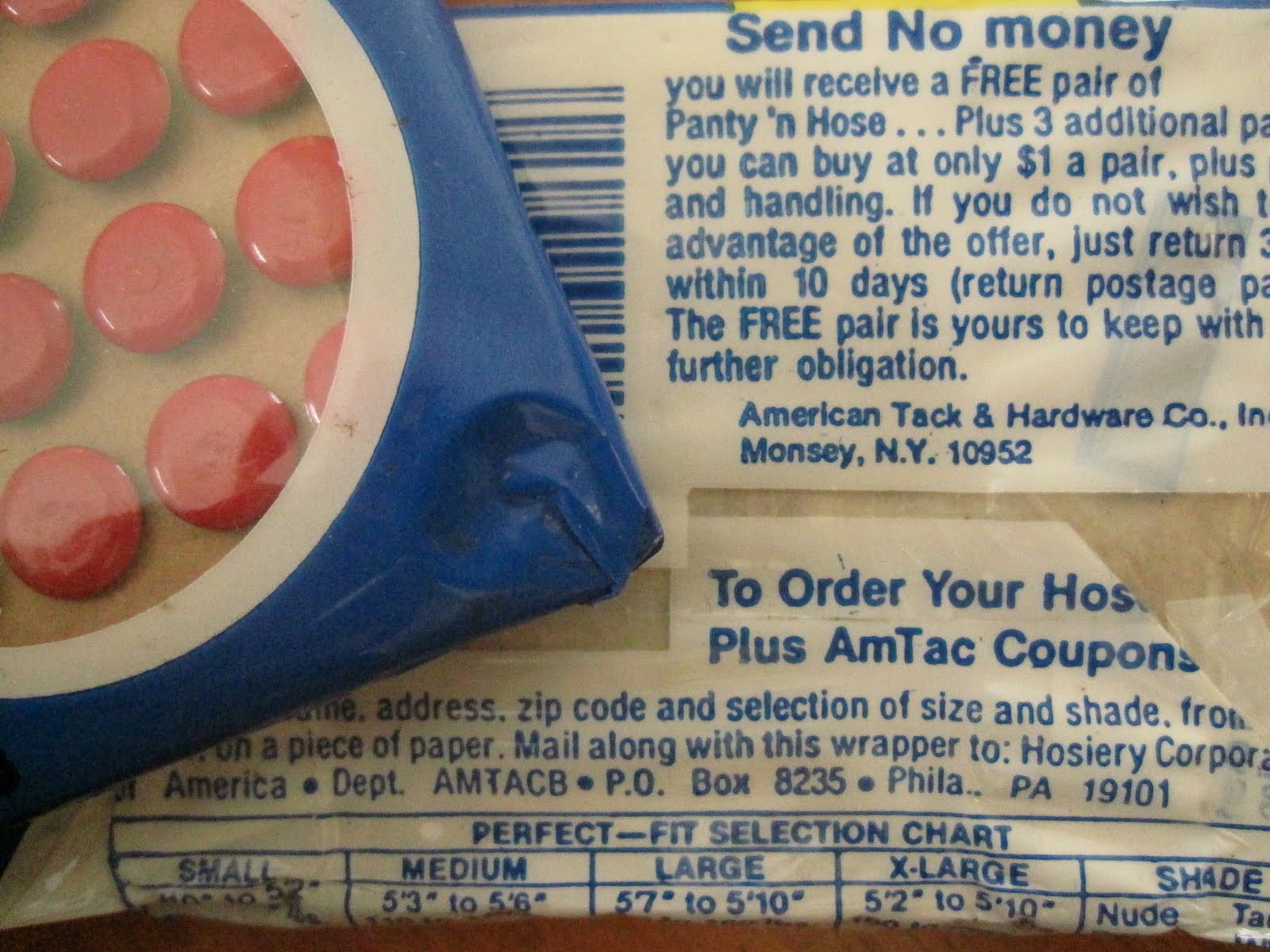
size and shade


I've always liked the mail in offer. I read a lot of my dad's old comic books from the sixties when I was a kid in the eighties, and I remember thinking about sending in for the special offers, you know, the body building booklets, magic tricks, correspondence art classes, just to see what would happen. I liked the idea of someone still being at the other end after all of those years. (I still like the idea of surprising things coming in the mail, but now, sadly, all mail is starting to seem anachronistic.) But I do wonder how many people took advantage of this one. The incredible hulk and body building seem like a natural fit, the invisible girl and magic tricks, I can see it. Thumb tacks and panty hose? Not exactly an obvious case of marketing symbiosis if you ask me. Still, I love the packaging, primary colors and sans serif, early to mid 80's I'm thinking? There is a bar code, and we all know the first standard bar code was scanned in Troy, Ohio on June 26th, 1974, but that they didn't really catch on until the early 80's.
Both companies, The American Tack and Hardware Co. and the Hosiery Corporation of America still exist, kind of, kind of like zombies. Both were bought out by private equity firms in the mid nineties. Hosiery Corporation of America became Hosiery Corporation International and went through chapter 11 in 2002, after being sued twice by the Federal Trade Commission for deceptive business practices, long story, but truly fascinating, no joke. It involves missing wills, a fatal bee sting (or was it?) and a litigious adoptive mother. Anyhow, I don't think either still make things in America. The remnants of American hosiery manufacturing still exist, mostly in North Carolina, but I think that might be a story for another day.